Let’s prepare a healthy salad together and look at the children’s picture book, “1 Big Salad.” I talk about how to make a salad healthy as we explore different vegetables. I also talk about ways to encourage children to try new veggies and fruits.
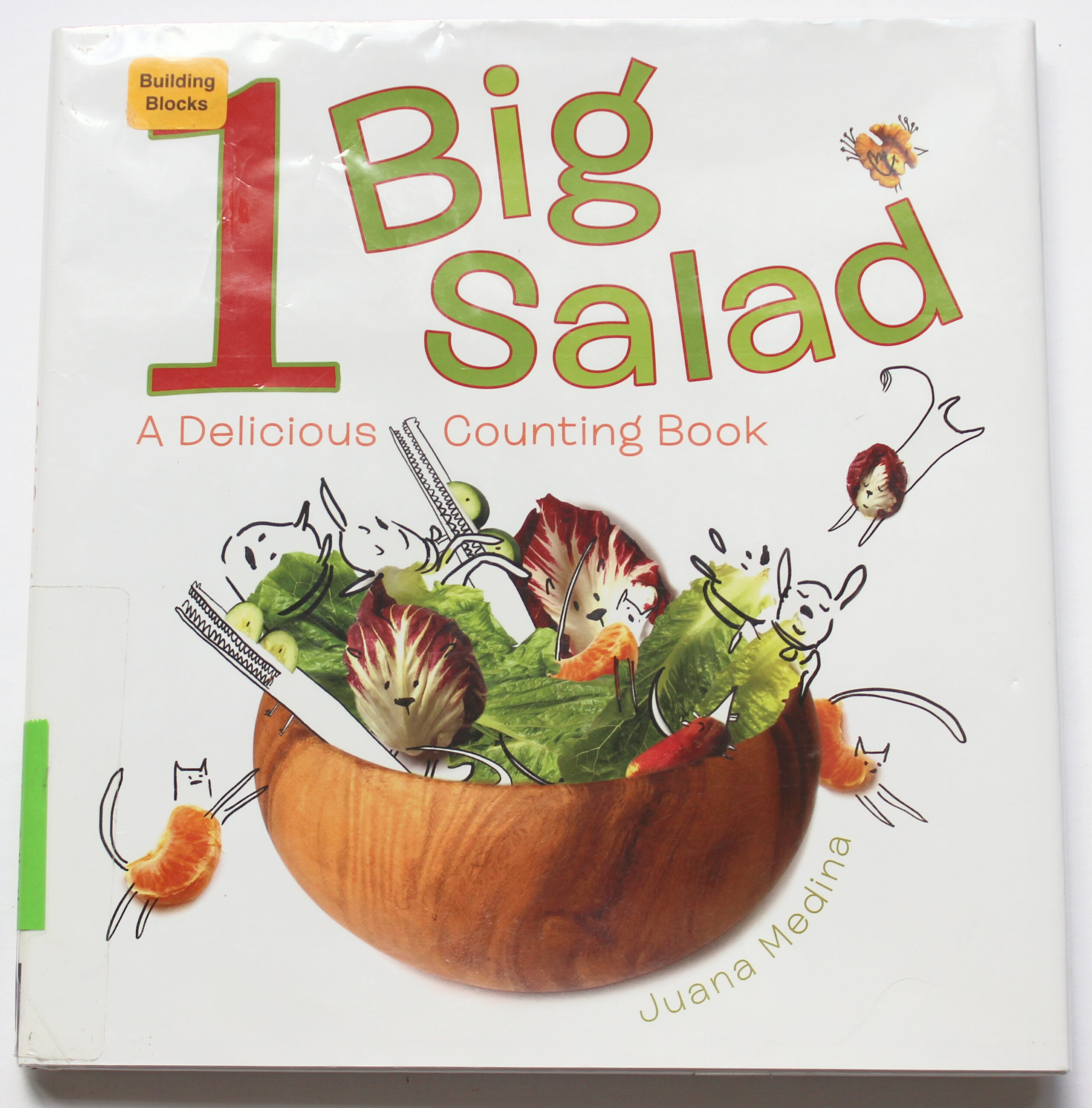
“1 Big Salad”
As an Amazon Associate I earn from qualifying purchases. This means I may earn a commission of the sale without any additional costs to you. Please note that I only recommend items that I personally use and love. I always have my readers’ best interest at heart.
This children’s picture book, written by Juana Medina, is a fun way to teach younger children to count, while also introducing them to different vegetables. Each page highlights a different vegetable (and even a fruit) while counting to ten. Each vegetable is also depicted as part of an animal. For example, an avocado is cut in half and the avocado pit is part of a deer’s nose; too cute!
I like this book because it gets children thinking about numbers and vegetables in a fun way. There are also a lot of great ways to make a fun activity out of this book with your children (see below).
You can find this book at your local library. It will be under the last name Medina, or you may find it under the topic of concepts and numbers. If you’d like to buy your own copy of “1 Big Salad” you can find it here.
A Healthy Salad
In my latest YouTube video, I discuss the book “1 Big Salad” and I also prepare a salad based on the ingredients featured in the book. Salads can provide a lot of great nutrition for us if we are careful to prepare them in a healthy way.

Ways to Make a Salad Healthy
Use Deeper Green Leafy Vegetables
Opting for green leafy vegetables that have a deeper green color will provide more nutrition than those pale leafy greens. Let’s look at a specific example of this. Below I compare iceberg lettuce to baby spinach with data from the USDA food data central:
| Iceberg Lettuce (100 gm) | Baby Spinach (100 gm) |
| 36 mg calcium | 68 mg calcium |
| 0.4 mg iron | 2.5 mg iron |
| 7 mg magnesium | 93 mg magnesium |
| 277 mcg lutein + zeaxanthin | lutein + zeaxanthin |
| 140 mg potassium | 582 mg potassium |
| 3 mg vitamin C | 27 mg vitamin C |
| 25 mcg vitamin A | 283 mcg vitamin A |
If you are used to eating iceberg lettuce, you can always do a half and half mixture for your salads. For example, you can make your salad with half of the leafy greens from iceberg lettuce and half from baby spinach (or some other green mix such as spring mixes found at grocery stores). Don’t forget about radicchio, which is a leafy vegetable that has a rich red color!
Include a Variety of Vegetables
Adding different colored veggies to your salads adds a variety of nutrients. Different colors in your fruits and vegetables indicates that they contain different beneficial nutrients. Try using a couple different colored vegetables when you make salads, and try making your salads different every time so that you vary your nutrient intake.
Add in Fruit for Flavor and Interest
Adding a fruit to your salad adds a pop of color but also a pop of flavor. They also add some carbohydrates for a source of energy. Fruits that are commonly added to salad include berries, clementines, pomegranate, apples, pear and craisins or raisins. But you don’t have to stop there, feel free to try different fruits in your salads!
Add Healthy Toppings
Traditionally, many of us like to add croutons to our salads because they add both crunch and flavor. While croutons can be perfectly fine to enjoy, I encourage you to swap those croutons out for nuts or seeds for some of your salads. Nuts and seeds offer healthy fats, fiber, protein and different vitamins and minerals.
Choose Your Dressing Wisely
What you put on top of your salad can greatly alter the nutrient content. Dressings add flavor to your salad but try to opt for dressings that are made with heart healthy fats such as extra virgin olive oil or avocado oil. You will also want to be mindful of the amount of sodium and sugar in store bought salad dressings.
Consider Making Homemade Dressing
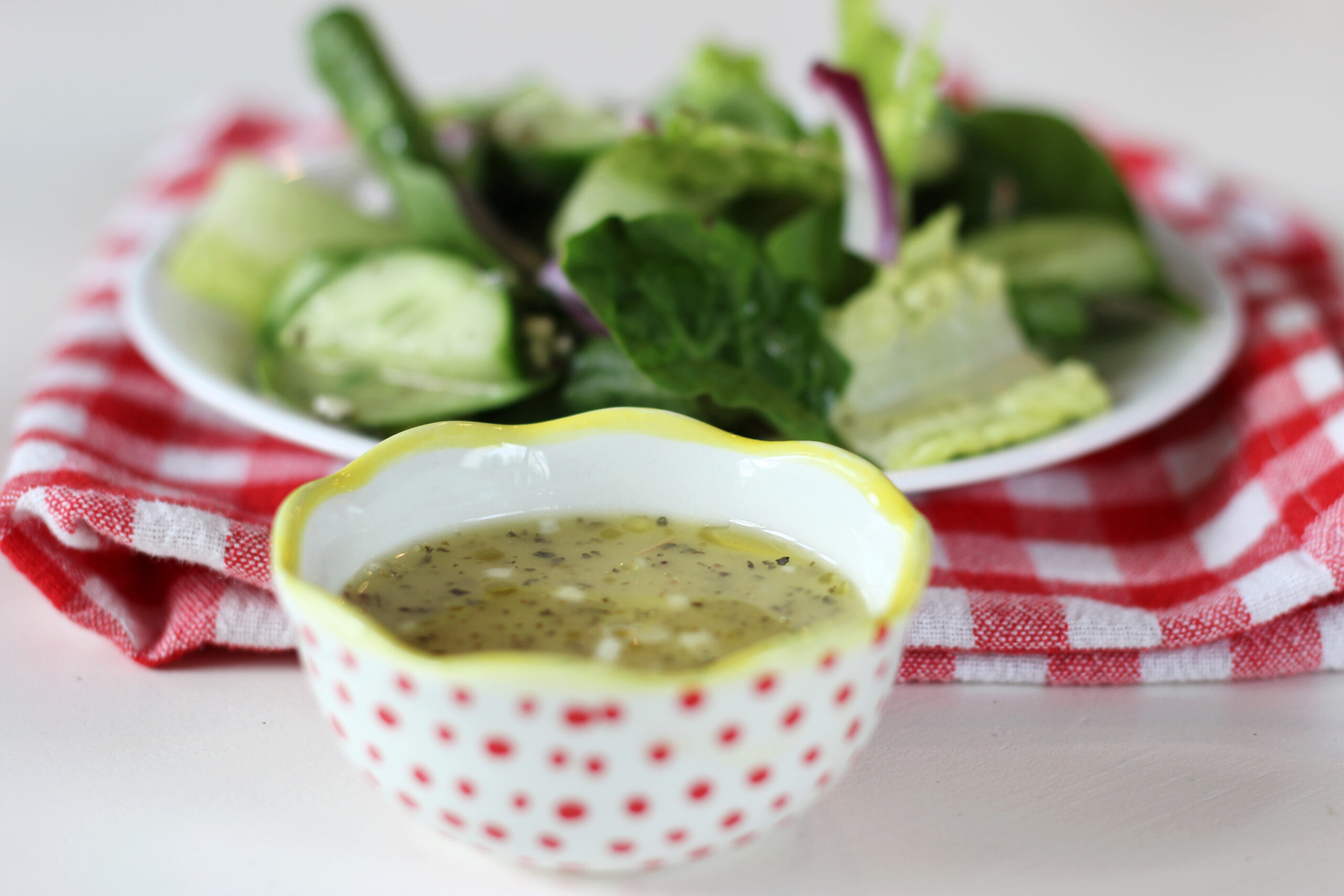
Store bought dressings are full of preservatives, salt and sugar. While it does take a few more minutes time to prepare, you will love the freshness of homemade dressings. You can keep them as simple as mixing equal parts oil to lemon juice, or if you are making a vinaigrette a ratio of 3 parts oil to 1 part vinegar works well. Then add any seasonings you like. Consider Dijon mustard, salt, pepper and herbs such as basil, parsley and oregano or freshly minced garlic or onion. Most homemade salad dressings are safe to keep for 3-4 days in the refrigerator.
I have a recipe on my blog for a lemon and olive oil salad dressing. You can find it here.
Ways to Get Your Children Involved
This picture book presents an opportunity to enjoy a fun and educational activity with your children. Here is a list of ways to enjoy this book with your children:
- Take a trip to the library, check this book out among other fun books and take some time to read together at home
- Ask your children which vegetables from the book they like and which ones they don’t like
- Ask which vegetables your children would like to try for the first time (or which ones they’d like to try again)
- Go to the grocery store together and pick up veggies or fruits your kids want to try, you can add these to a salad or even try them separately
- Discuss the importance of eating different colored fruits and vegetables
- Discuss the different nutrients we receive from eating fruits and vegetables
- Make a salad together, supervise your children as they learn new kitchen skills
- Challenge your children with using kitchen knives and vegetable peelers (safely and supervised of course!), using measuring spoons and cups, washing veggies or fruits in a colander, mixing the salad dressing, serving the salad and also clean up time
- If your children are learning to count, you can have them count out the ingredients as you go (for example, after you slice a cucumber have them count the number of cucumber slices there are)
My Challenge for You
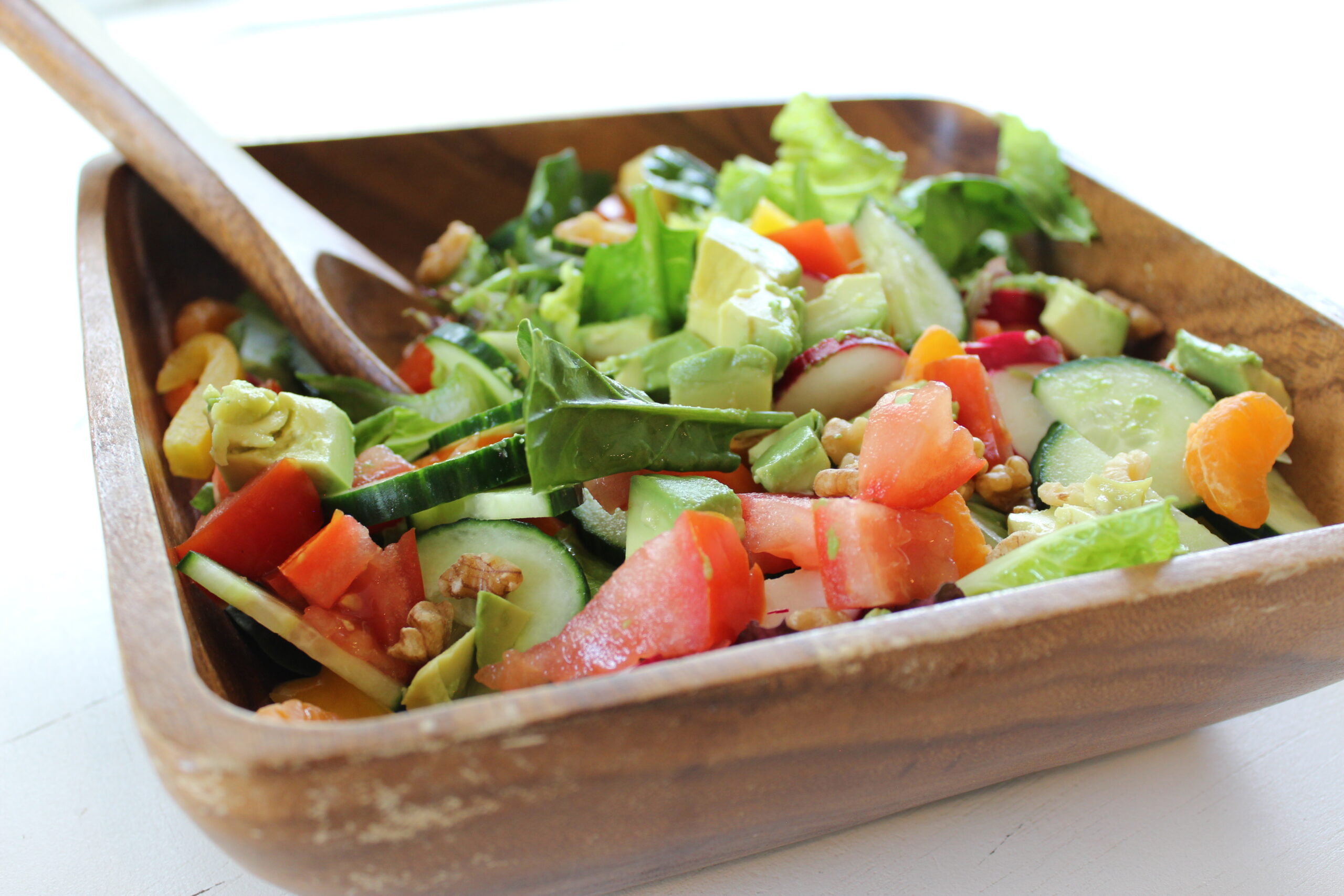
Based on the book “1 Big Salad” and the salad I prepared, I challenge you to try new vegetables, fruits and or toppings on your salads. You can swap out the greens you are using, or try using different vegetables such as carrots, mushrooms, bell pepper, tomato, cucumber, radish, avocado, etc. Onions add a lovely interest to salads as well; you can try red onion, green onion or shallots. Fresh herbs are another way to make salads more interesting. Try using fresh cilantro, basil or chives on your salad.
Please let me know if you participate in the challenge!
Leave a Reply